
Fruit Slice Charms: Approve the Edge Finish Reference
For resin fruit slice charms, request the manufacturer’s finished-edge appearance reference for the actual style being offered. Identify the perimeter areas covered by that reference and connect it to a named sample and quotation revision. A product photograph can introduce the visible appearance, but the supplier needs to confirm which reference represents the finish included in the commercial offer.
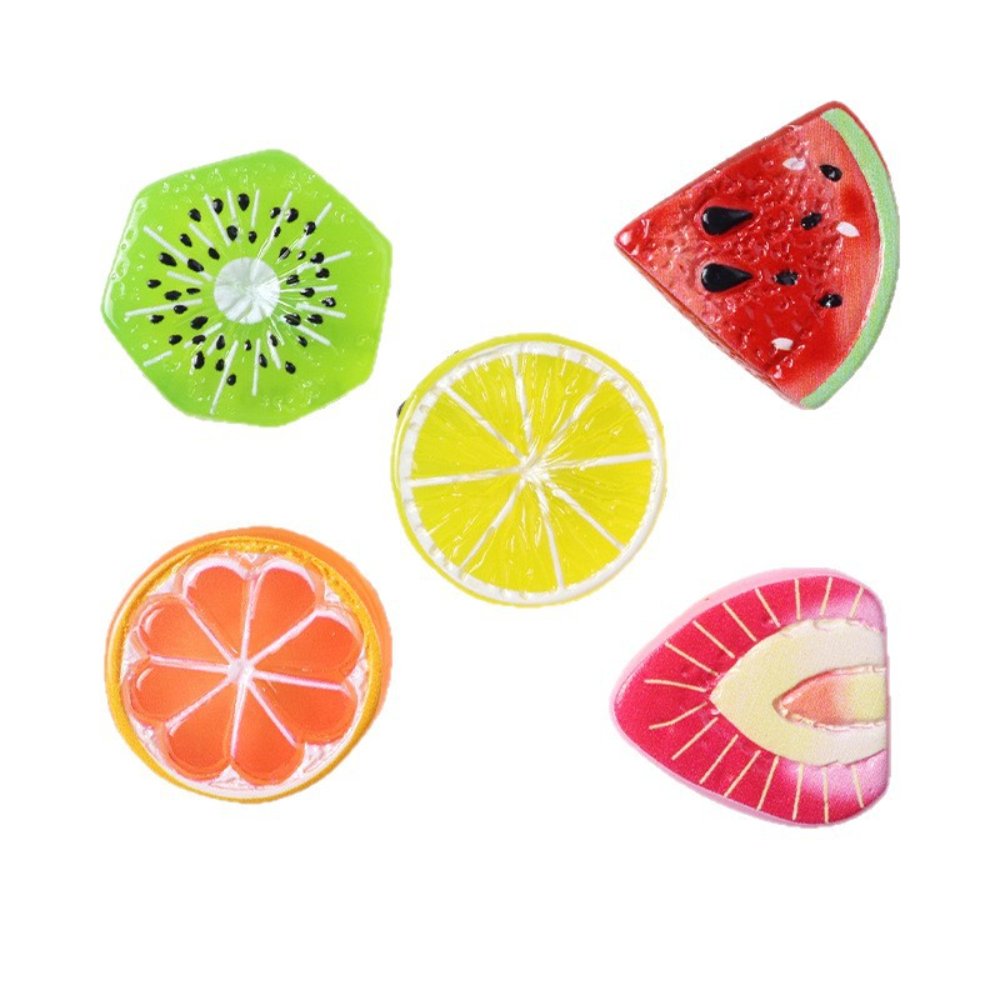
Official Resin Fruit Slice Charms appearance board. The displayed pieces do not establish a supplied set, fixed mix, edge finish specification or tested properties.
Begin with the actual fruit-slice product reference
CY Accessories lists Resin Fruit Slice Charms with several named fruit appearances and a Random Mixed Styles option. Its gallery shows fruit-shaped decorative pieces with different outlines and contrasting perimeter appearances. Use the manufacturer’s actual style identifier when requesting an edge-finish reference. A general enquiry for fruit charms can otherwise leave the supplier unsure which shape or offered version is under discussion.
Keep the edge-finish question separate from selecting the assortment. The catalogue names do not establish a fixed mixture, a supplied set or the proportion of individual styles. Here the buying action is to identify the finished perimeter appearance represented by an offered reference. Ask the manufacturer to state which named styles that reference covers, together with any style that requires a separate example.
Ask the manufacturer to identify the edge areas
Ask the supplier to identify the perimeter zones used in its own description of the product. A labelled manufacturer view can distinguish the visible front boundary from an adjoining side area where those terms apply. Use the supplier’s actual terminology rather than assigning a construction or finishing process from the photograph. The aim is to make the purchasing question point to a clearly identified area.
Do not infer a coating layer, a polishing operation or a separate rim component from a change in colour or shine. Ask the manufacturer what the offered finish description means for the identified area. If it can provide a reference view or document, keep that record attached to the exact product. An appearance description should not silently become a claim about how the object was made.
Official product-gallery arrangement for appearance reference. The photograph supplies no manufacturer cleaning instruction, packing-label record or batch identification.
Request the reference that represents the offer
Ask which available manufacturer image, retained reference or identified sample represents the edge finish proposed in the quotation. Record the style and version covered by the reply. Where a catalogue view and another manufacturer reference appear different, ask the supplier to explain which one is current. Keep the explanation with the offer instead of choosing a finish without confirmation.
A useful reference should make the relevant area recognisable to both teams. Ask the supplier to state the viewing context it uses if that is needed to explain the appearance. Retain its own reference conditions and terminology. Do not create a numerical acceptance limit, surface grade or test procedure from the displayed product image, and do not treat an additional photograph as an independent performance result.
Buying field
Requested supplier response
Product and style
Actual supplier identifier for the offered fruit-slice decoration.
Named edge areas
Manufacturer labels for the perimeter zones under discussion.
Finish description
Supplier wording for the appearance included in the offer.
Applicable reference
Manufacturer document, view or identified sample and its revision.
Sample correspondence
Which proposed sample represents the stated edge appearance.
Offer correspondence
Quotation line and unresolved appearance questions kept with the reply.
Keep finish appearance separate from geometry and safety
An edge-finish reference answers an appearance question. It does not define the overall dimensions, thickness, a fixing interface or the product’s intended application. If the enquiry needs any of those details, ask the manufacturer to address them separately. This keeps an appearance approval from being used as evidence for a specification that the supplier has not actually stated.
The gallery also does not establish a smoothness grade, an absence of sharp features or suitability for contact with a person or another item. Do not turn a decorative fruit shape into a food, toy or child-use claim. The supplier should identify the offered product and provide any additional information relevant to the buyer’s intended application. The edge-reference record remains limited to the actual appearance scope it describes.
Connect the reference to the sample discussion
When a sample is offered, ask which edge areas and which version of the manufacturer reference that sample is intended to represent. Keep the sample identifier with the supplier’s response. A sample submitted for style selection may not automatically be the final finish reference for the quoted supply. The manufacturer can state whether the same item serves both purposes.
If an observed sample and the proposed reference appear inconsistent, describe the area being questioned and ask the supplier to clarify the current offer. Retain its response rather than inventing a manufacturing correction. A revised sample or reference, if offered, should identify what it replaces. This gives the buying team a record of the actual proposal without prescribing a finishing, repair or handling procedure.
Separate official gallery arrangement. Visible quantities and motif proportions do not define the offered assortment, a batch composition or a packing scheme.
Use the gallery within its actual scope
The three images show different arrangements from the fruit-slice product gallery: a separated appearance board, a closer display grouping and a larger scattered grouping. They help identify the shapes and areas being discussed. They do not show a factory finish specification, a manufacturer inspection record or the accepted contents of a packed order.
The visible quantity of pieces in a photograph should not become a purchase quantity or mix ratio. Likewise, a display background or a commercial watermark is not a batch label or a finish reference supplied for the buyer’s order. Ask for the applicable manufacturer record and identify its relationship to the actual offer. Keep product appearance, document identity and commercial quantities in their appropriate supplier replies.
Retain one current approval correspondence
Keep the style identifier, manufacturer edge-area labels, finish description and applicable reference with the sample and quotation correspondence. If a supplier proposes a change, ask which part of the appearance record changes and which earlier reference is replaced. Keep any unanswered area question visible while the offer is being compared. This prevents an old gallery view from becoming the assumed final specification.
A completed enquiry should make clear which edge appearance the supplier offers and which reference represents it. It should also identify the sample discussion to which that reply applies. This is a practical purchasing record for a specific decorative component, without claiming that the finish has been independently tested, that every catalogue style is identical, or that a particular manufacturing process or safety result has been established.
Buyer FAQ
Does a glossy area in the photograph establish the finishing process?
No. Ask the manufacturer to explain its actual finish description and the areas covered by the offered reference.
Can the edge reference define the overall dimensions or fixing interface?
Keep those specifications separate. An appearance record should not supply dimensions or an attachment claim that the manufacturer has not stated.
Do the pictured pieces define a supplied set or mixture?
No. Request the actual commercial assortment and quantity separately from the edge-finish reference.
What should be retained with the supplier reply?
Keep the offered style, named edge areas, applicable reference and sample identifier with the current quotation correspondence.
Use the Resin Fruit Slice Charms product reference and request the manufacturer’s applicable edge-finish appearance record for the exact offer.
Name the offered fruit style and relevant perimeter areas.
Request the manufacturer finish description and its actual reference.
Keep the sample, revision and quotation correspondence together.
wholesale resin accessoriesB2B supplier sample record